Skip to content

Drug Development

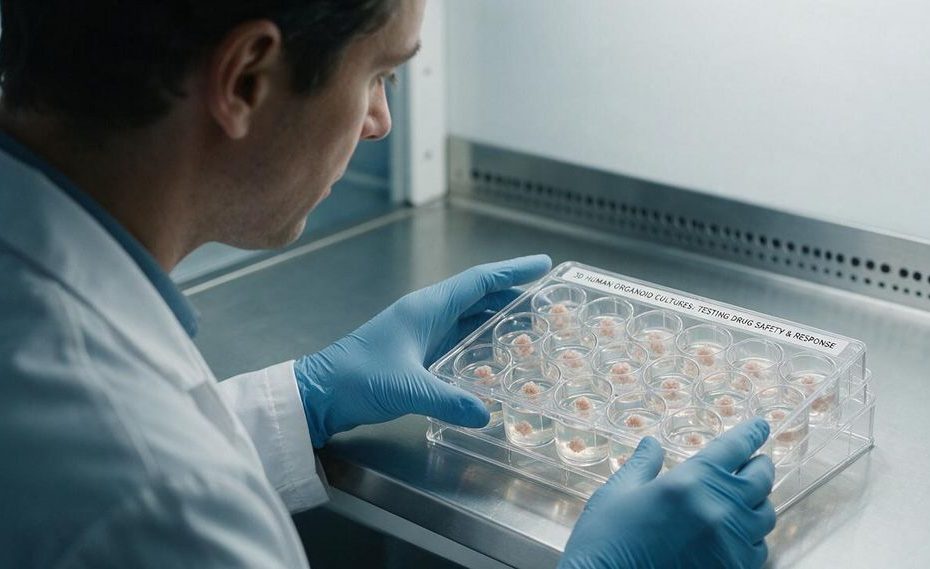
Scientist examining human organoid cultures in a laboratory for drug development research

Why Organoids Are Becoming More Useful for Drug Development

Organoids in drug development are becoming more useful because they give you a three-dimensional, human-relevant model that sits between simplified cell cultures and human clinical trials. They can reproduce selected structural and functional features of human organs,… 
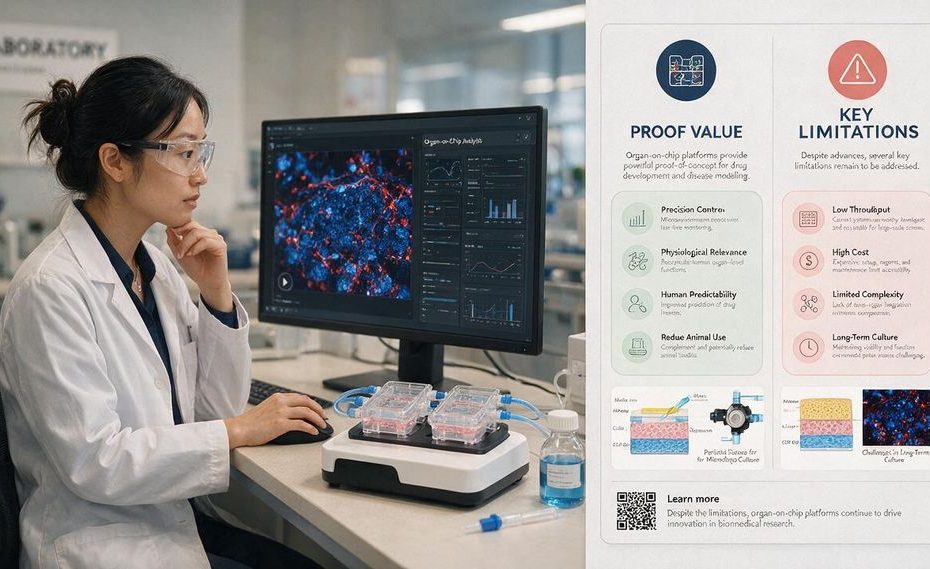
Scientist examining an organ-on-chip device in a laboratory for human tissue testing

What Organ-on-Chip Models Can Prove and Where They Still Fall Short

Organ-on-chip models can prove specific human tissue responses under controlled conditions, including barrier behavior, mechanical-force effects, and certain toxicity signals. Their organ-on-chip limitations become apparent when a study depends on whole-body immunity, circulation, endocrine feedback, long time… 

Scientist reviewing biotech drug development data in a laboratory, illustrating why biotech innovation takes years to reach patients

Biotech Innovation Is Slower Than You Think

Biotech innovation moves slower than most people expect because discovery is only the opening move. What reaches patients must survive long development cycles, low success rates, operational drag, manufacturing demands, and regulatory review before it becomes… 

Scientists using AI in pharmaceutical research and drug development

How AI Is Reducing Time and Cost in Drug Development

You know that traditional drug development is a long, expensive process—often taking more than a decade and costing billions. AI is changing that reality. From early compound discovery to late-stage clinical trials, AI is helping…